
Some of the links in this post are affiliate links. As an Amazon Associate, we earn a referral fee from qualifying purchases—at no extra cost to you.
Table of Contents
Understanding the Need for Apartment Water Storage
Let’s face it—living in an apartment means dealing with tight spaces and unexpected emergencies. Whether it’s a water main break, power outage, or natural disaster, you never know when your taps will run dry.
That’s where apartment water storage solutions come in. When you’re a city dweller, storing water isn’t just wise—it could literally save your life. We rely on water for drinking, cooking, cleaning, and even flushing. If supply is cut off, things can spiral quickly.
Most people have food stashed somewhere, but water? Not so much. That oversight can be dangerous.
How Much Water Should You Store in an Apartment?
A good rule of thumb is to store at least one gallon of water per person per day, with a minimum 3-day supply. But that’s just drinking and basic hygiene.
If you can swing it, aim for two gallons per person per day. This allows for:
- Drinking
- Cooking
- Limited washing
For a couple living in an apartment, that means 12 gallons for three days. Add pets or kids? You’ll need more. It’s best to think ahead rather than scramble later.
Top Apartment Water Storage Solutions That Actually Work
Let’s dive into apartment-friendly water storage solutions. You don’t need a sprawling basement or massive tank—just smart planning and space efficiency.
Stackable Water Storage Containers for Apartments
These are the go-to for preppers in tight quarters. Stackable containers let you maximize vertical space—under tables, behind doors, even in closets.
Look for:
- BPA-free plastic for safe storage
- Handles for easy transport
- Spigots or faucets for easy dispensing
One popular option? The Reliance Aqua-Tainer—compact, rugged, and easy to stack.
Reliance Aqua-Tainer 7 Gallon Water Container
A go-to for preppers with tight spaces. Rugged, BPA-free, and designed to stack—perfect for closets or corners. The built-in spigot makes dispensing easy during emergencies.

Collapsible Water Bags for Emergency Storage
When not in use, these fold flat like a towel. But fill them up and they hold anywhere from 1 to 5 gallons. Think of them as your water parachute in a crisis.
Pros:
- Super lightweight and flexible
- Great for grab-and-go kits
- Ideal for short-term emergencies
They’re perfect for tucking behind furniture or inside bug-out bags.
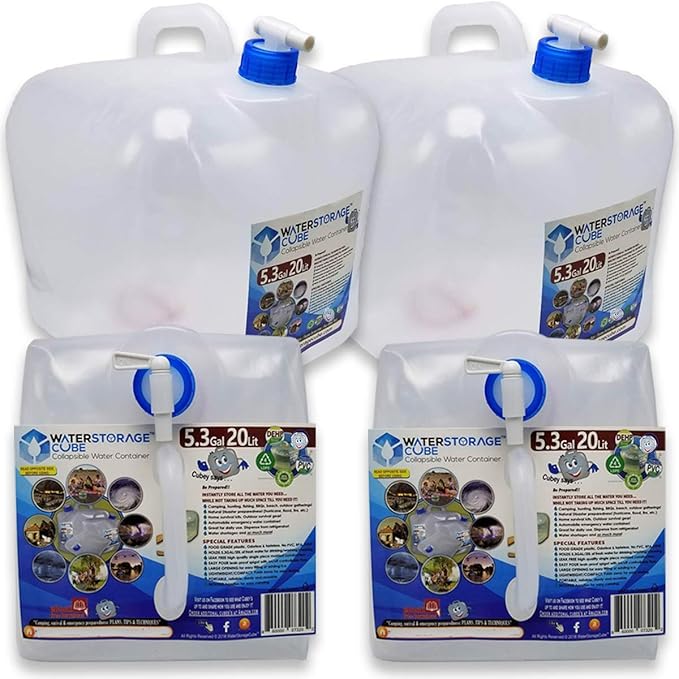
WaterStorageCube Collapsible Water Containers (5.3 Gallon)
Lightweight, foldable, and ready for sudden shut-offs. Tuck them in bug-out bags or behind furniture. Made from BPA-free, food-grade plastic.
Under-Bed Water Storage Tanks
What’s under your bed—shoes, dust bunnies, or life-saving water?
These low-profile tanks slide easily under most bed frames. A popular example is the AquaPod Kit, which is long, low, and holds up to 60 gallons.
Make sure to:
- Use food-grade containers
- Keep it dark and cool to prevent algae
- Avoid placing near heat vents
It’s out of sight but ready when you need it.
AquaPodKit Emergency Water Storage (Bathtub Use – 65-100 Gallons)
Ideal for last-minute emergencies. Line your bathtub and fill it with clean drinking water before disaster hits.

Water Bricks: Modular and Stackable Storage Blocks
Water Bricks are like Lego blocks for grown-up survivalists. Each holds 3.5 gallons and stacks perfectly like building blocks.
Why they’re awesome:
- Easy to carry
- Stack vertically or horizontally
- Can also store dry goods
These are ideal for urban apartments where every inch counts. You can even stack them to form a makeshift bench or table base!
WaterBrick 3.5-Gallon Stackable Containers
Heavy-duty, modular containers that stack like Legos. Use them in closets or even build a table base! Great for both water and dry food storage.
Using Bathtub Water Storage Liners (Like the WaterBOB)
When disaster strikes, your bathtub can become your emergency water tank.
A WaterBOB lets you line the tub and store 100 gallons of clean water. It fills straight from the tap and seals to prevent contamination.
Great for:
- Hurricanes
- Citywide water shut-offs
- Last-minute water grabs
It’s a one-time use item, but can be a lifesaver if the city loses pressure suddenly.
WaterBOB Bathtub Emergency Water Storage (100 Gallons)
Transforms your tub into a sealed, clean water tank in minutes. Ideal for hurricanes, boil advisories, or infrastructure failure.

Hidden Storage Hacks for Small Apartments
Don’t have much room? Let’s get creative. You’d be amazed at where water can hide.
Balcony Water Storage Ideas
If you’ve got a balcony, you’ve got space. Use weatherproof water barrels or bins with UV protection. Cover them to block sunlight and keep the water cooler.
Just remember:
- Protect from freezing or overheating
- Keep containers sealed and clean
- Consider a cabinet or storage bench to conceal them
Kitchen Cabinet Water Stash
Your pantry isn’t just for beans and ramen. Slide a few 1-gallon jugs behind cereal boxes or under your sink.
Tips:
- Use clear, food-safe bottles
- Rotate every 6 months
- Label the date you filled it
This solution works quietly in the background until it’s needed.
DIY Water Barrel Systems for Apartments
Got space in a closet or laundry area? Build your own mini-barrel system using:
- Two to four 5-gallon food-grade barrels
- Spigots for controlled dispensing
- Wooden crate base for elevation
This setup is ideal if you want more capacity but need it compact and modular.
Water Rotation and Shelf Life Tips
Storing water isn’t set-it-and-forget-it. It has a shelf life.
Here’s how to keep it safe:
- Tap water (if chlorinated): lasts 6–12 months
- Filtered/distilled water: use within 6 months
- Commercial bottled water: check expiry date
Mark your containers with fill dates and rotate every few months. It’s like organizing your fridge—but for survival.
Potable Aqua Water Purification Tablets
Purifies stored water fast with iodine-based tablets. Lightweight, long shelf life—perfect for your emergency kit or bug-out bag.

Bleach Alternative: Aquatabs Water Purification Tablets
Chlorine-based tabs that leave less taste than iodine. Great for larger batches of stored water.

Avery Removable Water-Resistant Labels
Label your containers with fill dates. These stick well to plastic and won’t smudge with condensation

How to Treat and Purify Stored Water
Stored water can go bad. Here’s how to keep it safe:
Boiling: The gold standard—kills off all bacteria and viruses.
Bleach: Add 1/8 tsp (8 drops) per gallon of water. Let it sit for 30 minutes.
Purification tablets: Lightweight, easy to use, and effective against most pathogens.
Avoid storing water near:
- Chemicals
- Gasoline
- Cleaning agents
Water can absorb smells—and that’s not what you want in your glass.
Best Compact Water Filters for Apartments
If your stored supply runs dry, you’ll need to purify new sources. Compact filters are a game-changer.
Top options:
- Sawyer Mini – fits in your pocket, filters 100,000 gallons
- LifeStraw – simple straw filter for direct drinking
- Berkey Go Kit – higher cost, but filters viruses too
Sawyer MINI Water Filter System
Filters up to 100,000 gallons. Fits in your palm and attaches to standard bottles, hydration packs, or the included pouch.

LifeStraw Personal Water Filter
Iconic survival tool—drink directly from water sources. No batteries or chemicals, just safe hydration.

Top-tier gravity filter that removes bacteria, protozoa, and viruses. Excellent for daily or emergency use in apartments.

Select options based on your space, budget, and the number of people in your household.
Emergency Water Sources Inside Your Apartment
Your apartment hides more water than you think. If your pipes run dry, check:
- Hot water heater – up to 30+ gallons
- Toilet tank (NOT bowl!) – use only if chemical-free
- Melted ice cubes – from your freezer
- Canned fruits/vegetables – drink the juice or syrup
These aren’t long-term fixes, but they might hold you over for a day or two.
Mistakes to Avoid in Apartment Water Storage
You’d be surprised how often people get water storage wrong. Here’s what to avoid:
- Using milk jugs – they degrade fast and are hard to clean
- Not labeling containers – you’ll forget when you filled them
- Storing in hot areas – heat breeds bacteria
- Skipping purification – don’t assume it’s still clean!
Storing water is easy. Just do it right from the start, and future-you will thank present-you.
Conclusion: Peace of Mind in a Jug
Water is life—literally. And in an apartment, every drop counts. With the right apartment water storage solutions, you can go from vulnerable to prepared in a single afternoon.
You don’t need a bunker or backyard. Just a plan, a few clever containers, and the will to prepare.
Because when the water stops flowing, what you did yesterday determines how well you survive tomorrow.
FAQs – Apartment Water Storage Solutions
1. What is the best way to store water in apartments without a balcony or extra storage space?
Using slim, flat water containers designed for narrow spaces or investing in collapsible water bags can be a lifesaver in small apartments without balconies or closets.
2. Can I store tap water in glass containers for long-term use?
While glass is non-reactive, it’s heavy and fragile. If using glass, store in a cool, dark place and use airtight lids. However, plastic food-grade containers are usually more practical for apartment storage.
3. How often should I sanitize my water storage containers?
It’s recommended to clean and sanitize containers every 3 to 6 months before refilling to prevent bacterial growth and contamination.
4. Is it safe to store water near electronics or heating devices in an apartment?
No. Water containers should be kept away from heat sources or electronics to avoid contamination, evaporation, or damage to the container.
5. Can I use rainwater collection as a water storage solution in an apartment?
Collecting rainwater in apartments is tricky due to limited outdoor space and potential contamination. If attempting, ensure proper filtration and purification before use.
Other Useful Resources Related To Apartment Water Storage Solutions
- WaterBOB bathtub emergency water liner review — holds up to 100 gallons, BPA‑free, keeps water fresh up to 12–16 weeks (primalsurvivor.net)
- AquaPodKit bathtub water storage system review — US-made, fits most tubs, offers about 65 gallons and keeps water sealed safely for several weeks (prepplans.com)
- Best water storage ideas for small spaces — creative vertical stacking, smart container choices like WaterBricks and jugs ideal for apartments (preppingmadesimple.com)
- Apartment prepping guide with tips on containers, cleaning, rotating water, and avoiding milk jugs or glass for long‑term storage (apartmentprepper.com)
- Reddit community insights on using Aquatainers vs drums, WaterBricks, leak issues, modular storage and mobility concerns in apartments (reddit.com)